God Made Me Do It

Today a Texas jury found Andrea Yates not guilty by reason of insanity for the drowning of her five kids. Frankly, in this country that seems to be turning increasingly Christian, I’m a little surprised she wasn’t found not guilty. And not because I expect the jury to be sympathetic to a woman who suffered post-partum depression or anything like that. No, I half-expected (well not really, but for the sake of irony I did) her to be found not-guilty because there is a Biblical precedent for parents being instructed by the voice of God to kill their children.

To me, the Yates case seems rather similar to the story from the Bible about Abraham nearly sacrificing his son, Isaac. I’m most familiar with this story via Kierkegaard’s Fear and Trembling, but I think this phenomenon of God telling people to kill their children is fascinating.

According to Kierkegaard (and others), Abraham is the “father of faith.” The fact that he had complete faith in what God told him to do and was willing to do it set the template for how Judeo/Christian people should relate to God. That is, that God has a plan and that us mere mortal humans cannot possibly try to understand what He has in store of us but that ultimately whatever He wants from us is bound to be the best thing.

Abraham is a pretty major character from the Bible and based on my understanding, very few people consider him to be insane. Yet when it comes to Andrea Yates, the obvious answer is insanity. Why is that? I’m not sure. Because she is a woman? Because we no longer believe those Biblical stories? I really don’t know.

I just find it absolutely fascinating that nobody (as far as I know) has even suggested that God really did instruct her to kill her children. Granted, as an atheist I don’t think this is possible, but I really am surprised that with so many Christians in this country who claim such a devout faith and want to create laws based on their religion, they still decide to pick-and-choose when it comes to matters of faith.

During my senior year of college I wrote a paper that sort of delved into this issue (which reminds me that I really need to post some of those papers…). One of the “first American novels,” Wieland and Memoirs of Carwin the Biloquist by Charles Brockden Brown dealt with a man who was commanded by what he believed to be the voice of God to kill his family. Ultimately, it turns out that the voice was definitely not God (and was instead a man who was able to throw his voice), but how was Weiland supposed to know that?

What intrigues me about these cases is the ethical dilemma that arises: harming/killing children is considered to be one of the most horrible and “evil” things that humans do to each other. Yet as the “father of faith,” Abraham is given a free pass. Granted, in the end his son didn’t die, but that was only because God supposedly intervened to stop. The fact remains that Abraham did fully intended to kill Isaac, so as far as I’m concerned, that makes him just as guilty as someone such as Andrea Yates who also claimed to hear the voice of God, yet this time God (for whatever reason) decided not to intervene. And as Weiland shows us, how is anyone supposed to be able to really tell the voice of God from the voice of someone pretending to be God.

For all we know, Abraham really didn’t hear the voice of God, but could’ve been “insane” (as we’ve labeled Yates) or could’ve been the victim of a cruel prank (as is what happened to Weiland). Either way, it seems to me that blindly following faith and believing that God is giving commands resulted in a terrible lapse of judgment.

I am glad that the jury saw the Yates case for what it was. The poor woman was obviously not in a sane state of mind when she killed her kids. If Abraham was alive today and killed his son, I would’ve argued the same thing. Both were insane.

Switch Me On, Turn Me Up

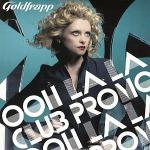
Ooh La La Club Promo
I hate to say this, but I’ve been in a bit of a CD buying funk lately. I went to Tower Records down by the Space Needle last Thursday and, despite spending way too much on CDs, didn’t really come home with anything all that exciting. The last CD I’ve been genuinely excited to get was Depeche Mode’s “John the Revelator” single (and I’m still recovering from the kick-ass UNKLE re-construction). I even received a bunch of CDs that I ordered from SecondSpin on Tuesday, but most of those felt like filler CDs that I felt I should have or wanted to check-out or something along those lines. Additionally, the last few times I’ve walked into Everyday Music I’ve left without even going through all of the just-in bins after nothing immediately strikes me.

That was until last night when I headed over to get the new MSTRKRFT album, The Looks.

After checking through all of the new release shelves and not finding it, I was feeling really disappointed. I have really been looking forward to this album since I started checking out the MSTRKRFT remixes last fall or some time like that. But for whatever reason, Everyday Music didn’t have it. Woe was me.

Then I started aimlessly wandering along the electronic section, when I saw something I couldn’t believe at first: Goldfrapp’s “Ohh La La” club promo CD single. This single was a promo-only release (i.e., making it extremely difficult to find and a pretty rare find) and I’ve been dying to get my hands on it for a long time. I’d been searching eBay, but when I did see a copy of that CD the price was often well over $30 and I couldn’t quite justify buying it.

Ultimately, I did end up downloading pretty much every remix on the promo (Peter Rauhofer!, Tiefschwarz!, two by Benny Benassi!, Phones!, and Andy Bell from Erasure!) — how could I not??? While I did buy some legit “Ohh La La” remixes from iTunes, I admit some of them weren’t so legit…

But then last night I was lucky enough to find a real copy of the promo for only $5!!!

Yes, I was quite excited at this find and am certain that the CD buying gods/fates/time influencers/etc. sent this CD to me as a signal that I shouldn’t lose my faith in buying new music… though I still have to figure out what to do about The Looks. I guess it’s time to buy from Amazon or something…

Also, as a side note: The fact I did go ahead and download these “Ohh La La” remixes was indeed a good thing. I included the Benny Benassi remix on my latest mix (the “Gay Pride 2006” mix that I have yet to post about) as well as the as-of-yet-untitled “darker” mix which uses the Peter Rauhofer remix. Further, since I was familiar with all of the various remixes, I knew that when the DJ at Neighbours was playing the Rauhofer remix, that the Benny Benassi remix would be better for dancing and stuff. Ever since my friend and I made that recommendation, I’ve only heard the Benny Benassi remix played there.

If you want to hear what all the fuss is about, Hype Machine has a bunch of links to the “Ohh La La” remixes as well as the original (though I’m guessing a bunch have expired). You can also (like I did) buy the “Ohh La La” EP from iTunes. And don’t forget to checkout the “Ooh La La” video.

And In Music News…

Justin Timberlake and Paris Hilton
First, checkout “I’m Bringing Back Sexy” from The Observer Music Monthly which touches on topics such as Justin Timberlake’s drug use, his thoughts on tabloids, and what why “‘music’s gone to such shit.”

If that doesn’t fill your daily need of pop music writing, Slate has an excellent article titled “Paris Hilton, Anti-Hero.” Despite the headline, the article is mostly about all the “diva music” (i.e. female vocalist) coming out this summer (Mariah, Shakira, Pink, Ciara, Rihanna, Jessica Simpson, Nelly Furtado, Janet Jackson, Beyonce, etc. etc. etc.). It’s a really smart article and ultimately makes the point that the “king of pop” music title should now be called “the king of pop” since women are the best-selling pop musicians nowadays. Forget Frank Sinatra, Michael Jackson, or even Justin Timberlake — the women are where it’s at.

As for me, I prefer Justin’s “SexyBack” over Paris’ “Stars Are Blind” — but that’s just me…

The Devil Wears a Superman Costume

For the first time ever in my life (I’m 90 percent sure, at least), I saw the top two weekend movies. I saw Superman Returns on Wednesday night and The Devil Wears Prada on Saturday afternoon. Am I falling deeper and deeper into the sell-out/becoming mainstream pit?

Music Make You Lose Control

The idea that started this mix is basically the reason I started playing around with mixes in the first place. When I got Missy Elliott’s The Cookbook last year, I knew that I recognized the “music makes you lose control” phrase from somewhere else. It wasn’t until I became obsessed with remixes and, in particular, the work of Jacques Lu Cont/Thin White Duke that I remembered where I had heard it before: Jacques Lu Cont’s first foray into electronic music, his group The Les Rythmes Digitales and their song “Music Makes You Lose Control.”

Then while trying to find every Jacques Lu Cont/Thin White Duke remix I could, I came across his amazing remix of that very Missy Elliott song, “Lose Control,” as well as the Faint’s “The Conductor” from their Danse Macabre Remixes remix album.

Throughout all of those mixes I was mesmerized by the repetition of the word “control.” I imagined how cool it would be to mix all the songs together and really emphasize the similarities despite the fact that they were totally different songs.

In fact, my first attempt at making a mix started off with these same three songs, but I scrapped that idea since I didn’t feel I had the skills I wanted and did the Destroy Rock (And Roll) mix instead.

After that mix and playing around with mixing for a while, I figured it was time to revisit my original idea. To make things a bit more exciting I decided that I was going to try to take elements from surrounding sounds and place them in different songs. This would create somewhat of a weave idea. What I mean is, you have songs A, B, and C. You sample something from song B and include that element in songs A and C. For the Music Make You Lose Control mix I started with the phrase “music makes you lose control.” I got an isolated sample of the words from the original version of Missy Elliott’s “Lose Control.”

It turns out that finding isolated things from other songs wouldn’t be as easy, so I scrapped that idea (though I intend to experiment with it more in later mixes) and just reused that phrase “music makes you lose control” throughout the entirety of the song. I realize, now, that it gets tired after a while… so consider it something of an formal practice of something or a very obvious attempt at trying out a new (to me) technique.

Once I had the first three songs put together, I wanted to somehow maintain the idea of music losing control. This doesn’t seem to be the case for “Fearless” as much, but I really liked the Richard X remix and compared to the original, this one has far more beeps and blips, so I tossed it in.

With the Vitalic remix of “Technologic,” the music really does lose control. I consider this song to be a meltdown of sorts, especially when the somewhat industrial sounding noises start creeping into the end of “Fearless.” Back when I was playing around with the idea of weaving sounds, I had those strange noises break into “Fearless” much earlier. It’s great zip zapping sound, and I definitely want to reuse it again somewhere.

The idea of everything falling apart continued into the nosiest Madonna remix I’ve ever heard: the Green Velvet mix of “Sorry.” Like the Destroy Rock (And Roll) mix, I felt compelled to include Madonna. I especially liked the idea that such a pristine poppy song such as “Sorry” could sound so different and alien.

The height of things falling apart, however, is when Dimitri Tikovoi’s remix of Goldfrapp’s “Twist” cuts into the tail end of “Sorry.” If “Technologic” and “Sorry” introduced strange distortion noises, the crunching almost-organic stuff in “Twist” takes things to a new level. I contemplated using another Jacques Lu Cont remix (the “Conversion Pervsion” remix), but figured that might be overkill. Plus, as I said before, the mix I used is delightfully bizarre.

Also, I must note, I think the transition between “Sorry” and “Twist” is probably the best in the mix. I love how the sounds from “Twist” create something of a symbiotic invasion at the end of “Sorry” and how you really cannot tell that they are leading into a new song. The transition makes me think of Tetsuo from Akira morphing with that energy at the end of the movie. Initially, I didn’t like the Dimitri Tikovoi remix of “Twist” since it took so long to get into the singing, but by layering it with “Sorry” you don’t even notice.

So at this point I guess I figured, Well, music has lost control and now things are sounding like we’re on another planet… (and a scary one, at that). I could’ve kept going darker and stranger, but instead I decided that when music breaks down it turns into happier dancier music. Hence, the Dahlbäck & Dahlbäck remix of The Knife’s “Pass This On.” Those familiar with Destroy Rock (And Roll) may remember that The Knife’s “Silent Shout” was the height of darkness in that mix. To change things up a bit, I decided to show the lighter side of The Knife for Music Make You Lose Control.

Following up “Pass This On” was the most difficult part of this mix. For some reason, the beats at the end are extremely difficult to align with anything else. I remember being stumped here for quite some time. Then I heard the Armand Van Helden song “Sugar” somewhere and it got stuck in my end. Inevitably, it ended up in this mix, and although the transition isn’t great by any means, it’s better than anything else I tried. There isn’t much to say about the song itself other than the fact I like it, it’s catchy, and somewhat cheesy. Like I said, when music lost control it sorta spun off into a cheesy dance house world.

Perhaps, though, the height of turning into pop music would be to include something by Britney Spears… and oh, look at what I did! I included the totally awesome Felix Da Housecat remix of “Toxic.” I came across this remix back when I was really into Felix Da Housecat remixes (his best ever: “Playgirl” by Ladytron) and have wanted to share it with the world ever since. The song clocks in at 143 beats-per-minute, which makes it one of the faster songs I’ve included in a mix (most hover in the 125-135 range).

Following Britney’s act is a less-pop, but more-cool song by LCD Soundsystem: the Tiga remix of “Tribulations.” This transition works pretty well, and I love how for about a minute into “Tribulations” we still hear the Britster crooning “Toxic.” But why did I include this song? Good question. To be perfectly honest, “Tribulations” and “After Dark” by Le Tigre (and “Sugar” as well) weren’t included for any thematic reason. I liked the songs and thought they fit somewhat well into the mix.

The closing song, however, I had planned from the beginning. For those who don’t know, “Out of Control” by the Chemical Brothers is probably my all-time favorite song. Vocals are done by Bernard Sumner from New Order and Bobby Gilespie from Primal Scream contributes, as well, making the song a powerhouse of goodness, as far as I’m concerned. The lyrics of the song also allude back to the original idea for this mix: control.

So there it is: the second mix. Ultimtely, I feel that this mix isn’t as good as Destroy Rock (And Roll). I had too many thematic ideas for the first part (“control” and that breakdown of music thing) and after that everything just went sort of crazy. I should have tried to do a mix focusing on one of the ideas at a time or do a totally eclectic mix. Also, I feel that this one lacks the “shine factor” that I felt for the first mix. These songs feel too gritty or something (despite having songs like “Sugar” and “Toxic” and even “Tribulations” and “After Dark”). I feel that this mix has a more pastel or muted-color palette, which I don’t like as much.

A final thing worth noting: I’ve decided to take a “DJ name:” Who Shot JR? I think this is a great idea since my initials are J.R. and I love Dallas so much. I may have to add a “DJ” before it, but for now I just want to be Who Shot JR?

So what’s next? I’m already 80% finished with the Gay Pride 2006 remix (and yes, I realize that Seattle Pride was last weekend (I actually thought that it was in July until a week before it happened). So far I’m really excited about the mix. It’s totally cheesy but everything transitions nicely and you feel like you are in a gay club (which is the intention). The playlist includes my favorite songs from Neighbours from the past year or so.

00:00 — “Music Makes Your Lose Control” by Les Rythmes Digitales
02:32 — “Lose Control” (Jacques Lu Cont remix) by Missy Elliott
09:06 — “The Conductor” (Thin White Duke remix) by The Faint
16:08 — “Fearless” (Richard X remix) by The Bravery
21:49 — “Technologic” (Vitalic remix) by Daft Punk
26:46 — “Sorry” (Green Velvet remix) by Madonna
30:52 — “Twist” (Dimitri Tikovoi remix) by Goldfrapp
36:30 — “Pass This On” (Dahlbäck & Dahlbäck remix) by the Knife
40:56 — “Sugar” (original club mix) by Armand Van Helden
47:43 — “Toxic” (Felix da Housecat’s club mix) by Britney Spears
53:30 — “Tribulations” (Tiga’s Out of the Trance Closet mix) by LCD Soundsystem
59:46 — “After Dark” (Morel’s Pink Noise vocal mix) by Le Tigre
65:18 — “Out of Control” by the Chemical Brothers

[save]  Download “Music Make You Lose Control” (very low-quality)

If you want a CD version of the mix, let me know and I might go ahead and send you one. I will be designing a CD cover and everything (and will update this post once that has happened).

Finally: “Marble House” Remixes!

I’ve been scavanging the net for over a month looking for the Rex the Dog and Booka Shade remixes of The Knife’s song “Marble House.” I bought the CD version of the single a while back, but that lacked the amazing remixes that the 12″ version of the signle has.

Finally today I found the remixes (and a bunch of other cool ones) on The Prettiest Pony. Now I must say, I’ve been pretty disappointed with The Prettiest Pony lately, but this smattering of remixes has totally restored my faith in the blog.

Check out the remixes already!

20 Centimeters

20 Centimeters
From the description on the SIFF web site, I was very excited to see 20 Centimeters:

Reminiscent of the Almodovar style and grounded by an amazing performance by Mónica Cervera, this bittersweet musical comedy is about a narcoleptic transvestite prostitute who longs to rid herself of the 20 centimeters hanging between her legs. She finds a refuge in her dreams where she is transformed into a seductive song-and-dance sensation.

Almodovar! Narcoleptic! Transvestite! Sounded great to me!

… Unfortunately, it wasn’t. The film didn’t have the smartness that an Almodovar movie has, and I felt like the narcolepsy and transvestitism (and for that matter, the “dwarf” best friend) were there for “freak factor” more than anything else. (Not to say that transvestitism wasn’t a main theme of the movie, but still…)

The only thing this film had going for it, as far as I’m concerned, was the musical numbers. And of those, the only one that really sticks in my mind is the dream sequence involving Madonna’s song “True Blue.” It envisioned what married life would be like — babies, horny/cheating husbands, funerals, etc. The sequence was great, and I almost recommend seeing the movie just for that.

Otherwise, the film follows Marieta, a woman who has a 20 centimeter (i.e. 7.8 inch) dick, which she wants to get rid of. She works as a prostitute but eventually gets a job as a man (since that was on her identification card) doing janitorial work. Along the way she meets a hunk of a guy who loves her for her penis and loves to bottom out for her even more. Things don’t work out with him, however, since he is too passive for her.

Like I said, this movie really didn’t impress me and I gave it only two stars. I would’ve given it one, but the “True Blue” part was so entertaining that I felt that aspect of the film needed to be rewarded.

Destricted

The fact that I cannot really post a picture from the movie Destricted should be the first sign that this is the most sexually explicit film I’ve seen (more so than 9 Songs, even). I don’t think you could see a movie with more penises unless you were watching porn (and this film definitely borders on pornography).

The idea behind Destricted is that seven contemporary artists are given a chance to make short films about “sex and pornography.” Each film, of course, somehow captures that artist’s unique style and perspective. Here are my quick and dirty (no pun intended?) thoughts on each:

“Hoist” by Matthew Barney — I haven’t seen any of Barney’s other films (such as The CREMASTER CYCLE or Drawing Restraint). The only reason I really recognized his name is because he is married to Bjork. I have to say, “Hoist” was pretty damn avant-garde. The film was basically a man (or something of a man — he was sort of half-nature/half-man or something like that) masturbating and using his cum to lube up a big drill or something. It was sort of funny that the film started with “Hoist” since it was definitely the most abstract of the pieces. I know I was thinking to myself, “Oh great, what have I gotten myself into this time? Is Destricted going to be even more abstract and difficult than Container???” As for the meaning from “Hoist,” I didn’t really get much. I figure it had something to do with industrialism and the environment (hence the nature man thing), but who knows for sure.

“House Call” — I’m not quite sure what exactly was going on with this film. To me, it looked like the camera was zooming in on a 1970s porn movie about a woman and a doctor having sex. The zooming-in effect was cool, but, again, I’m not sure whether we were supposed to see/feel something different. I’m not even sure whether the film was a porn film from the 1970s or a remake to look vintage or what. I wasn’t really a fan of this film.

“Impaled” — Directed by Larry Clark (who did Kids and Bully), “Impaled” was easily the best film of Destricted. The film started with Clark interviewing straight guys between the ages of 18 and 25 or so about pornography and sex. He asked them about their experience with women, what sort of sexual acts they liked to do, how long they have watched porn, etc. At one point he even had the guys remove their pants and show their dicks and discuss why or why they didn’t shave/trim their pubic hair. (Most of the guys did trim and said they did it because the guys in porn films did the same.) Apparently Clark was interviewing the guys because they had answered an ad he posted on the internet offering guys a chance to fuck a porn star.

Once Clark choose one of the guys (a moderately attractive guy from Southern California who really wanted to try anal sex), Clark and the guy interviewed the various porn stars to see who had the best chemistry with the guy. It was funny to see how uncomfortable the guy was around most of the porn stars that were obviously more experienced and somewhat intimidating. He asked various questions such as: When did you start making films? When did you lose your virginity? Why do you like the industry? etc. One of the more poignant answers was from a woman who had just gotten out of a five-year relationship with a woman. The guy asked when she lost her virginity, and it was something having to do with being raped by a relative when she was a little girl. The guy was obviously asking this question to get some steamy fantasies going, and her answer hit him like a ton of bricks.

Ultimately, he chooses a 40-something because he said he liked older women, she loved anal, and she was totally flirtatious with him. The sex scene was pretty straightforward. They made out, she gave him head, etc. I was surprised that he could get hard for the shoot considering it could’ve been a pretty awkward situation. I was doubly surprised that they didn’t use condoms for the sex. It seems like a lawsuit waiting to happen (a young guy having sex with a woman who has been in the porn industry for quite a long time…), but I would imagine/hope everyone was tested prior to interviews. The best part, however, was when the guy got his anal sex fantasy fulfilled. After fucking for a while, he pulled out to find that his sick was covered with shit. He was somewhat grossed out so the woman went to get some baby wipes to clean it off and wipe her ass. She apologized and after he got hard again, they kept on going. At the end of it all, the guy didn’t really have any profound thoughts. He said the anal was nastier than he thought it would be and that shit in the ass was the kinda stuff you didn’t really think about when you fantasized (no, really?).

What I loved about “Impaled” was the way Clark managed to tease out how much pornography has influenced people’s lives nowadays. It’s so accessible that pretty much every guy has seen it — and has had his ideas of sex influenced by it, as well. “Impaled” really struck down the fantasy that pornography creates and presented it as real, messy (literally!), sex.

“Sync” — This was a 1-minute super-fast editing job that took various sex scenes from movies and placed them together as one continuous collage-like film. What really impressed me about the movie was that I learned during This Film Is Not Yet Rated that when it came to sex scenes in movies, the MPAA was really critical about what types of positions could be shown and for how long, etc. Hence, the “man laying down with woman riding her” and “woman laying on her back with man fucking her while propped up on his elbows,” etc. positions are so common in movies. “Sync” really emphasized how all the sexual positions in movies are just the same.

“Death Valley” — Nearly eight minutes of a fairly hot guy masturbating in the desert but is ultimately unable to cum. That is what “Death Valley” was. But despite the terse description, this short was actually really well done. Matmos did the music, though I still feel like they sampled or ripped-off some other song I know. But the film is, obviously, about male impotence or something like that. I did enjoy it.

“Balkan Erotic Epic” — I thought this short was funny at times, but also stupid at times. Overall, I think the stupid outweighed the funny and I wasn’t impressed. The point of the film seemed to be to show how sexuality was a common part of everyday Balkan life. This included traditions like men masturbating on fields, women putting fish in their vagina for a day then grinding up the fish and feeding it to their husbands, etc. I’m not sure if these traditions were real or not, but I don’t necessarily think that’s the point. To me they just seemed old fashioned and sexist.

“We Fuck Alone” — I would imagine that most people in the audience would’ve rated this movie as their least favorite. Of course, I sort of liked it. “We Fuck Alone” followed two people (a guy and a girl) who were masturbating to pornography. This went on for about 20 minutes and was accompanied by a strobe effect (and I love strobes) and a noisy soundtrack. The woman used stuffed animals as a prop. The guy used a blow-up sex doll as a prop. At one point the guy shoved a gun into the doll’s face (which may have been too blatant and cliché?). What I thought was interesting about the film was the idea that “we fuck alone” in the sense that pornography has replaced human sexual contact for people so much of the time. Is this good or bad? I’m still not sure, but “We Fuck Alone” gave me quite a bit of time to ponder it.

Favorite Artists For Each Letter Of The Alphabet

Inspired by a post on I Love Music, I thought it would be fun to copy the idea and do my favorite music artists for every letter of the alphabet. I’m trying to do this as a free-association-type activity, so I’m just doing the first band I love or is in my mind as of June 5, 2006 that I can think of.

  • A — Air
  • B — Bjork
  • C — Chemical Brothers
  • D — Digitalism
  • E — Everything But The Girl
  • F — Franz Ferdinand (double points for 2 Fs!!)
  • G — Goldfrapp
  • H — Hot Chip
  • I — Interpol
  • J — Juan Maclean
  • K — The Knife
  • L — Ladytron
  • M — M83
  • N — Nine Inch Nails
  • O — Oingo Boingo
  • P — The Pixies
  • Q — Q-Burns Abstract Message
  • R — Royksopp
  • S — Simian
  • T — Tiga
  • U — Underworld
  • V — Vitalic
  • W — White Rose Movement
  • X — Xiu Xiu (a few songs are in my iTunes and I haven’t deleted them yet so…)
  • Y — Yeah Yeah Yeahs
  • Z — Zdar

3 Needles

Chloë Sevigny in 3 Needles
Keep in mind that the title of this film is 3 Needles and that the movie is about HIV. It seems that in most movies I’ve seen that deal with HIV (with the exception of Trainspotting), the person becomes HIV+ by having unprotected sex or blood transfusions (if it’s a straight person) or something like that. It also seems that whenever HIV is discussed in relation to the “developing nations,” one always assumes that HIV is contracted via sex and/or circumcision/genital mutilation. Sure, all of those issues are addressed in 3 Needles, but needles remain the symbolic object-of-fear.

3 Needles is broken into three stories: one story about an HIV outbreak in a small village in China, one story about a porn actor who has HIV and his mother’s attempt to identify with him, and one story about nuns trying to save the souls of people with HIV in South Africa.

The first story is a little confusing at first. It opens with a woman (Lucy Liu driving a van down a dirt road. She is stopped by a group of guys dressed in military clothes. She claims that she is transporting rape seeds. The soldiers demand that they inspect her cargo. Finally they remove a box that looks like a casket. They ask what is in it; she insists that it is just rape seeds. The commander tells the soldiers to shoot it to “give it some air.” Blood spills out. At this point, I think the audience is supposed to believe that she is smuggling a person for some reason or another. When the soldiers open the box, however, bags of blood spill out.

We then learn, though a flashback, that the woman’s job is to set up blood collection camps in small villages. The story then starts following a man named Tong (Tanabadee Chokpikultong). Tong takes his wife and daughter to the blood collection center so that they can get more money. Tong, however, has the flu and since he appears sick, the people at the blood center refuse to take his blood. They also refuse to take his daughter’s blood since she has not yet turned twelve.

A week later (the center allows people to donate blood every week) they still do not let Tong give his blood. He does, however, convince them to take his daughter’s blood, joking with them that she is now twelve.

Tong uses the daughter from his daughter’s blood donation to buy a water buffalo (which she gets to claim is hers). The next time Tong and his daughter go to give blood, the man still refuses to take Tong’s blood, but he does give him a job to deliver the bags of blood to the woman in the van’s house. When he arrives there, he sees that everyone is sick, but makes the delivery anyway.

Shortly thereafter, the daughter becomes sick, as does Tong’s wife. We see that other villagers are sick, too. Not much time passes before Tong’s entire family is dead.

After the provincial authorities refuse to investigate the incident, Tong goes to a larger governmental office. There, he convinces them that they need to find out what happened and they return to Tong’s small village. It doesn’t take much time for the doctors to realize that everyone has become infected with HIV. Tong explains to the commander (from earlier) that the woman in the van set up a blood donation center.

At the end of the first part, the soldiers help the family-less Tong harvest his rice, which Tong shares with the rest of the sick villagers since they are unable to produce food on their own.

The second story is, by far, the darkest. It starts off with a young man in his early 20s (Shawn Ashmore) taking a sample of blood from his sick and dying father. Then we see him on the scene of a porn film saying it’s okay if he doesn’t use a rubber since he was just tested. I think it’s worthwhile to note that he is straight and acting in a straight porn film (that surprised me). On the day of his next HIV test he runs into a crying girl as he enters the clinic — it turns out he’s acted with her before, and now she is HIV+.

Ultimately, of course, others become infected and his father dies and the doctors confirm that he, too, is HIV+. His family doesn’t have much money, and with the recent loss of her husband, the actor’s mother (Stockard Channing) doesn’t know what to do. She goes to a support group and overhears a gay guy talk about how he was always afraid and feeling anxious about acquiring HIV, so he goes out and intentionally meets guys who will infect him (which is called “chasing”).

It seems that this gives the mother an idea and she goes and takes out a life insurance policy. She has a physical to prove that she is healthy, and then goes to stand outside one of the HIV support groups. She meets a guy there who she brings to a strip club, gets drunk, and seduces. When they are about to have sex, he insists that they use a condom. She hesitates, and then bites it so that it’s ineffective. He fucks her. She gets tested. She is still HIV-.

Discouraged by her failed attempt, she starts going through her son’s stuff. She finds the needle that he used to use to extract blood from his father (so that he could fake the test). That night, while he is sleeping, she takes a sample of his blood. In a scene that definitely had everyone in the theatre cringing, she even licks some of the leftover blood off of his arm after she removes the needle. More than shocking or disgusting, I found the scene to be extremely emotional and sad.

Presumably by injecting herself with his blood, at her next visit to the doctor she is informed that she is indeed HIV+. She cashes out the life insurance, and she and her son live a life of luxury. In the very last scene of their vignette, the actor and his mother run into one of the porn actresses who he infected. She accosts him for doing what he did (knowingly infect others, or, at the very least, not take a truthful HIV test) and seems to imply that what he did should be illegal.

If the second story is the darkest, then the third story is the most controversial. It follows three nuns (Olympia Dukakis, Sandra Oh, and Chloë Sevigny) who go to South Africa in order to save the souls of people with HIV so that they don’t go to hell but go to purgatory or heaven instead.

The plot for part three is a little more complicated and has more characters, so rather than summarize it, I wish to comment on the rather harsh critique of Christianity.

One of the commonly-held myths in Africa is that if a person who has HIV has sex with a virgin, the virus is passed on to the virgin and the person with HIV is cured. Of course, the presence of Catholic missionaries in Africa who promote abstinence until marriage (i.e. preserve virginity) and condemn the use of birth control/contraception only exacerbates the problem… but 3 Needles goes a step farther and draws a parallel between the Virgin Mary and HIV.

The idea goes like this: God took the sins of humanity and put them into the Virgin Mary so that she could have Jesus in order to repent those sins. Likewise, the African myth that if you put sin qua HIV into someone, that sin qua HIV will transfer into that other body, which can then be redeemed. At the end of part three, one of the nuns is raped. She says something to the effect of, “How can I blame him? I spend my nights praying to a virgin, too.”

I, for one, thought that this was a rather bold statement. If I’m reading the film correctly, the filmmakers are possibly saying that those who criticize the efforts of people in Africa to “denounce the myth” but at the same time believe in a similar Christian myth are being hypocrites. It’s not that the logical argument in either situation makes sense, but the structure of the argument/idea is the same. And in both situations, the fetishizing of virginity has harmful consequences.

As for the appearance of a needle in the third story, toward the end one of the nuns follows some kids who collected the green biohazard disposal container from the landfill. The kids take the container to the back of a bar, where the nun sees the kids cleaning the needles with a towel then repackaging the needles. It turns out that all of the needles that the doctors had been using to test the people were in fact dirty contaminated needles in the first place, and that the doctors may in fact be infecting the very people they are trying to test/save.

What I really liked about this movie was that it definitely took great lengths to de-stigmatize an HIV infection. Rather than suggesting that HIV is the result of overindulgent behavior (promiscuous sex, drug use, etc.), HIV in fact is more of a result of human desperation and greed at the hands of others.

At the closing of the movie, one of the nuns makes a comment along the lines of, “When humans have this great enemy why can’t we band together to fight it? Well, I think it’s you, God, who prevents us. Or, at least, the ways people believe in you.” The film depicts how a blind faith in Buddha, Christian God, and African mythology are very dangerous beliefs that perpetuate the spread of HIV in various communities.

I gave the movie four starts. It could very easily have been a five-star movie, but the first story was confusing at first and the second part felt too short while the third part felt too long.